
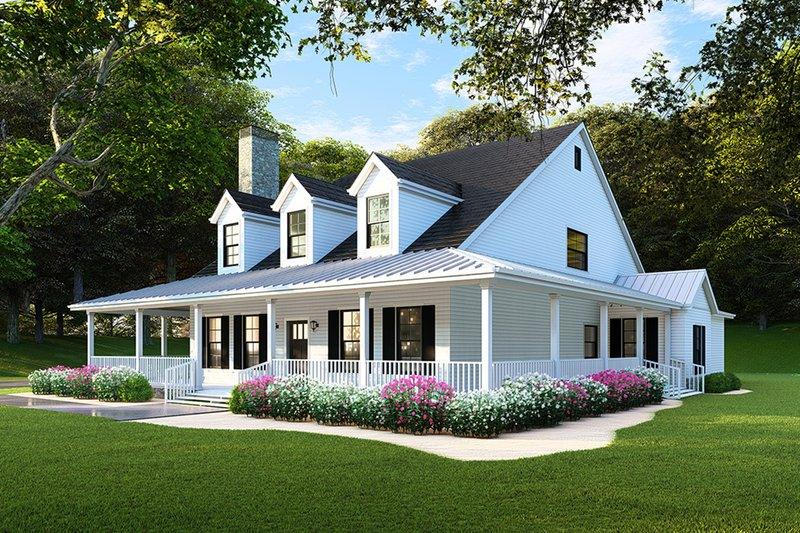


When you’re planning a new farmhouse with a wrap around porch, one of the first questions that comes up is: how much space do we actually need? The answer isn’t just about picking a number off a website or copying what your neighbors built. For a family of four, the right square footage balances practical living needs with long-term functionality—and it depends heavily on how your family actually uses space.
Most real estate advice throws around the 600-700 square feet per person guideline, which would put a family of four in the 2,400-2,800 square foot range. But here’s what those calculations miss: not all square footage is created equal, and farmhouse house plans with wrap around porch configurations eat into your usable interior space in ways that need careful consideration.
The Real Square Footage Sweet Spot for Families of Four
After building and renovating farmhouse properties across Kentucky, we’ve found that most families of four function best in homes between 1,800 and 2,400 square feet of interior space—not including the porch. This range gives you enough room to spread out without creating maintenance headaches or wasted space that just collects dust.
Here’s why this range works:
1,800-2,000 sq ft: Three bedrooms, two full bathrooms, open kitchen/living area, small mudroom. This is your efficient farmhouse that keeps the family connected and maintenance manageable. You won’t have unused formal spaces, and cleaning doesn’t take all weekend.
2,000-2,200 sq ft: Three to four bedrooms, two and a half bathrooms, proper mudroom, larger kitchen with pantry space, separated laundry room. This is where most families find their comfort zone—enough space for kids to have their own rooms and parents to have some breathing room.
2,200-2,400 sq ft: Four bedrooms, two and a half to three bathrooms, home office possibility, full mudroom with storage, walk-in pantry. This gives you flex space that adapts as kids grow—that fourth bedroom starts as a nursery, becomes a playroom, then transitions to a home office or guest room.
Going beyond 2,400 square feet often means you’re heating, cooling, and maintaining space you don’t actually need. Smaller than 1,800 means you’ll be tripping over each other when both kids hit their teenage years.
Why Wrap Around Porches Change the Square Footage Math
This is critical: when you’re looking at farmhouse house plans with wrap around porch designs, that porch footage doesn’t count as interior living space, but it absolutely impacts your budget and how the home functions.
A standard wrap around porch adds 400-800 square feet of covered outdoor space to your home. At $60-150 per square foot to build (depending on materials and foundation type), you’re looking at $24,000-$120,000 just for the porch structure. That’s money that doesn’t increase your interior square footage but significantly enhances how you use the property.
Here’s the trade-off families need to understand: Would you rather have 2,200 square feet indoors with a full wrap around porch, or 2,600 square feet indoors with a basic front porch? For families with young kids, the wrap around porch often delivers more practical value—it becomes outdoor play space, a covered area for muddy boots, and a buffer zone between inside and outside.
The porch depth matters too. Most farmhouse wrap around porches run 6-8 feet deep. At 6 feet, you can fit chairs but movement is tight. At 8 feet, you have proper furniture placement with walking room. We typically recommend 8-10 feet for families who’ll actually use the space. Anything less feels cramped once you add rocking chairs and kids trying to get past.
Breaking Down Square Footage by Room Function
Let’s talk about how that total square footage actually breaks down in a well-designed farmhouse for a family of four:
Kitchen and Dining: 400-500 sq ft
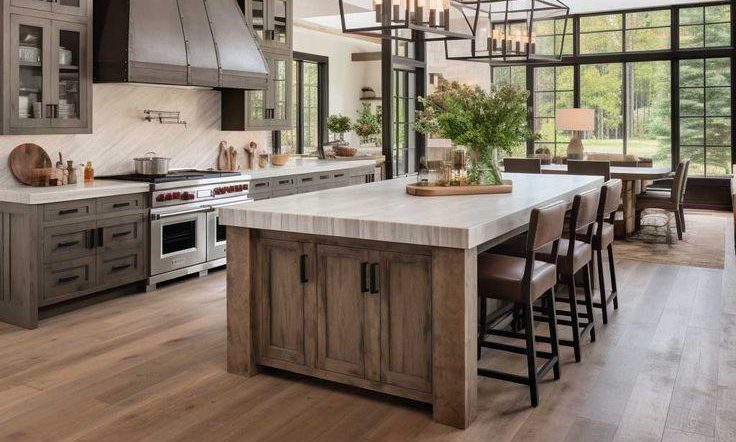
The kitchen is where farmhouse living happens. You need 250-300 square feet for the cooking zone—this includes the island (which should seat at least 3-4 people), appliances, and working counter space. The adjacent dining area needs another 150-200 square feet if you want a table that seats six comfortably.
Open concept layouts are standard in modern farmhouse house plans with wrap around porch designs because they make the space feel larger and keep parents connected to kids. However, that openness means kitchen mess is always visible. If this bothers you, consider plans with a pantry wall or half-wall that provides some visual separation.
Main Living Area: 300-400 sq ft
Your primary gathering space needs enough room for a sectional or sofa set, TV placement, and traffic flow. Less than 300 square feet feels cramped when the whole family’s home. More than 400 starts feeling empty unless you fill it with furniture you don’t need.
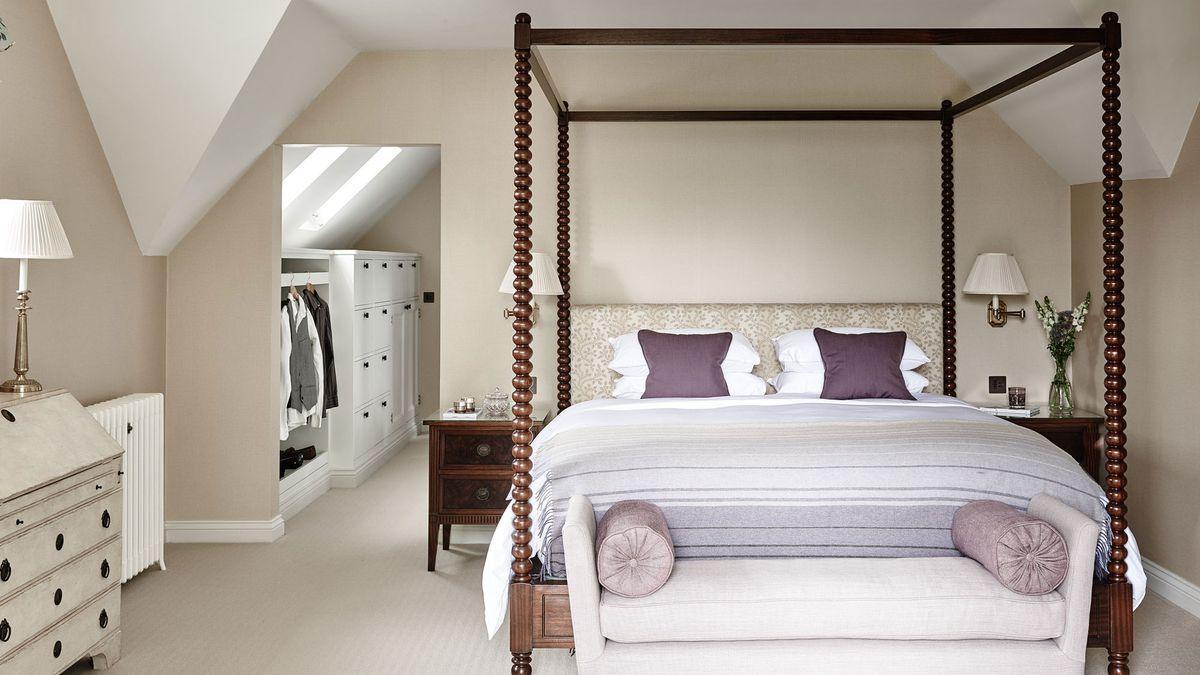
Primary Bedroom Suite: 350-450 sq ft
Parents deserve a retreat. The bedroom itself needs 200-250 square feet (enough for a king bed, dressers, and movement space). The ensuite bathroom adds another 80-100 square feet, and a walk-in closet takes 70-100 square feet. This isn’t luxury—it’s functional space that makes daily life smoother.
Kids’ Bedrooms: 250-350 sq ft total
Two kids’ bedrooms at 120-140 square feet each, plus a shared bathroom at 50-70 square feet. You don’t need mansion-sized kids’ rooms. What matters more is good closet design and strategic placement—ideally both kids’ rooms on the same side of the house with a Jack-and-Jill bathroom between them.
Mudroom/Laundry: 80-120 sq ft
This is non-negotiable for farmhouse living. You need space for coats, boots, backpacks, and a functional laundry area. Too many plans skimp here, and it shows immediately—clutter migrates into the kitchen and living areas because there’s nowhere else for it to go.
Hallways, Closets, Storage: 250-350 sq ft
This “wasted” space isn’t wasted—it’s what makes a house functional. Skimping on hallway width or closet depth to hit a lower square footage number creates daily frustration.
Add it all up and you’re looking at 1,880-2,470 square feet, which aligns perfectly with our 1,800-2,400 recommendation.
One Story vs Two Story: How It Affects Your Square Footage Needs
This decision dramatically impacts how the square footage feels and functions.
Single-Story Farmhouse House Plans with Wrap Around Porch (1,800-2,400 sq ft): Everything on one level means no stairs—huge benefit when you’ve got toddlers, you’re carrying laundry, or thinking about aging in place. However, single-story homes require larger lot sizes because the footprint spreads wider. Your foundation costs are higher since you’re pouring more concrete.
The wrap around porch works beautifully on single-story designs because it’s all accessible from one level. You can step out from the kitchen to the porch, walk around to the front entrance, and back in through the living room without climbing stairs.
Two-Story Farmhouse Designs (1,800-2,400 sq ft total): Splitting the square footage across two levels shrinks your foundation footprint and roof size, which can save $15,000-30,000 in construction costs. The typical split puts 1,100-1,400 square feet on the main floor (kitchen, living, dining, primary suite, mudroom) and 700-1,000 square feet upstairs (kids’ bedrooms, shared bathroom, bonus room).
The upstairs space is where flexibility happens. That bonus room over the garage becomes a playroom when kids are young, a homework zone during school years, and a media room or guest space later. Two-story plans also make better use of the wrap around porch by creating interesting roof lines and providing cover over the porch areas below.
The downside? You’re carrying everything upstairs—laundry, groceries, babies. If one parent works from home and needs an office, you’re either sacrificing a bedroom or using bonus space that might be too far from the daily action.
The Open Floor Plan Reality Check
Every farmhouse design you’ll find online shows a big open kitchen/living/dining space. It photographs beautifully and it’s what buyers expect. But here’s what they don’t tell you:
Open concepts work best when they’re not completely open. The best farmhouse house plans with wrap around porch designs use subtle separations—a beam marking the kitchen/living transition, a slightly raised dining platform, or strategic furniture placement.
Why? Because families of four generate noise and mess. Two kids doing homework at the island while dinner cooks and Dad’s on a work call in the living room creates chaos. Completely open means sound travels everywhere. Some visual separation—even just a column or half wall—helps manage the noise without losing the connected feeling.
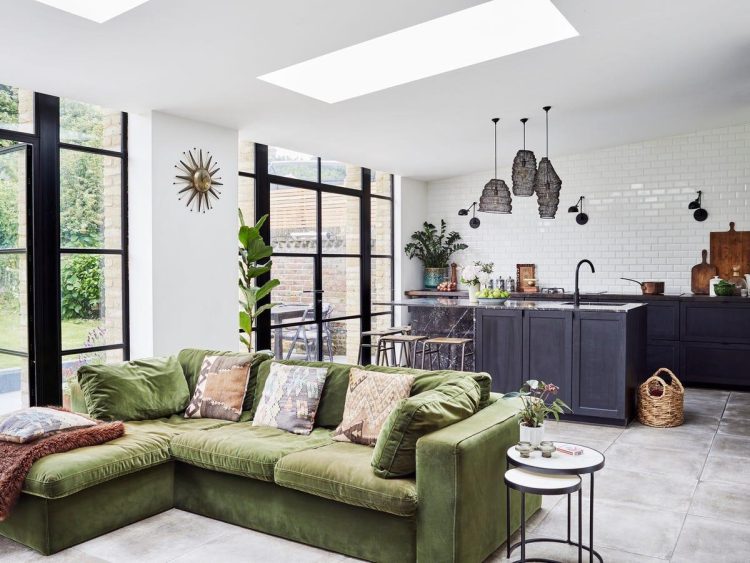
The other consideration: when the kitchen is always visible, it needs to stay cleaner. Closed-concept kitchens hide the dinner prep mess. Open concepts put it on display. If you’re realistic about your cleaning habits, this matters.
Future-Proofing Your Square Footage Decisions
Most families stay in their homes 10-15 years. Your four-year-old and two-year-old will be teenagers before you know it. That farmhouse you’re building needs to work for right now and ten years from now.
Age-Appropriate Space Planning:
- Kids ages 0-5: Need visibility. Open floor plans work because you can watch them while cooking. The wrap around porch becomes outdoor play space you can monitor through windows.
- Kids ages 6-12: Need dedicated homework/project space. That bonus room or fourth bedroom becomes essential. The porch is where they ride bikes and play between rain showers.
- Kids ages 13-18: Need privacy and space to spread out. Those two kids’ bedrooms better be adequate size, and having a separate hangout zone (finished basement or bonus room) prevents them from taking over the main living areas.
If you build 1,800 square feet now, you’re committing to a tight fit when both kids are teenagers. If you build 2,800 square feet with formal dining rooms and parlors you’ll never use, you’re maintaining empty rooms for a decade.
The 2,000-2,200 square foot range with smart flex space is where most families find the balance. That fourth bedroom shifts functions as needed. The bonus room adapts. You’re not locked into one configuration.
What Actually Increases Resale Value
Square footage alone doesn’t drive farmhouse values—it’s how that square footage is configured and what’s included in the design.
High-Value Features in Farmhouse House Plans with Wrap Around Porch:
- Primary bedroom on main level (huge for buyers 40+)
- Proper mudroom with storage
- Walk-in pantry
- Laundry on the same level as bedrooms
- Three car garage (especially in rural areas)
- Quality porch construction (8+ foot depth, proper drainage)
- Open kitchen with island seating for 4+
Lower Value Features That Add Square Footage:
- Formal dining rooms that require furniture most families don’t own
- Front parlors or sitting rooms that become storage for random stuff
- Oversized primary closets (beyond 100 sq ft is diminishing returns)
- Bonus rooms with no HVAC or finished ceilings
When we’re helping families choose between plans, we always ask: would you rather have 2,100 square feet with a three-car garage and proper mudroom, or 2,300 square feet with a formal dining room you’ll use twice a year? The answer tells us everything about whether they’re thinking practically or just chasing square footage numbers.
Construction Costs Per Square Foot Reality
In Kentucky, building a quality farmhouse runs $150-200+ per square foot for the main structure, depending on finishes and site conditions. That wrap around porch adds another $60-150 per square foot depending on materials.
Here’s what that means for real budgets:
1,800 sq ft farmhouse + 500 sq ft wrap around porch:
- Interior: $270,000-360,000
- Porch: $30,000-75,000
- Total: $300,000-435,000 (before land, site work, permits)
2,200 sq ft farmhouse + 600 sq ft wrap around porch:
- Interior: $330,000-440,000
- Porch: $36,000-90,000
- Total: $366,000-530,000
2,400 sq ft farmhouse + 700 sq ft wrap around porch:
- Interior: $360,000-480,000
- Porch: $42,000-105,000
- Total: $402,000-585,000
Every 200 square feet of interior space adds roughly $30,000-40,000 to your build cost. That’s not counting the larger HVAC system you’ll need, higher utility bills, increased property taxes, and ongoing maintenance.
Making the Final Square Footage Decision
Here’s our recommendation process for families of four considering farmhouse house plans with wrap around porch:
Step 1: List your non-negotiables. Do both kids need their own bedroom? Do you need a home office? Is a main-level primary suite essential? This gives you your minimum square footage baseline.
Step 2: Map your daily routines. Where does homework happen? Where do you eat meals? Where do kids play when it’s raining? This reveals whether you need 1,800 or 2,200 square feet—it’s about function, not just numbers.
Step 3: Factor in the porch. A 500-600 square foot wrap around porch effectively extends your living space by 25-30% in good weather. If you’ll use it daily (and most farmhouse families do), it reduces how much interior square footage you need.
Step 4: Think 10 years out. Your kids will be teenagers. Will this layout still work when they need privacy, study space, and room for friends?
Step 5: Get real about maintenance. Every extra 100 square feet is more to heat, cool, clean, and eventually update. If you’re stretched financially, building smaller and building well beats building bigger with cheaper finishes.
For most families of four in our area, we end up recommending 2,000-2,200 square feet of well-designed interior space with an 8-foot deep wrap around porch that covers two to three sides of the home. This configuration gives you the farmhouse aesthetic with wrap around porch lifestyle while keeping the interior space functional and maintainable.
The Bottom Line on Square Footage
The right square footage for farmhouse house plans with wrap around porch isn’t about following formulas or copying what you see online. It’s about understanding how your specific family of four lives, what you’ll actually use, and what makes financial sense for your situation.
Too small and you’ll be renovating in five years. Too big and you’re maintaining empty rooms while paying higher utility bills. The sweet spot for most families sits right around 2,000-2,200 square feet with thoughtful design that maximizes every square foot.
That wrap around porch isn’t just curb appeal—it’s functional outdoor living space that changes how you use the property. When you factor it into your planning, you can often build a smaller, more efficient interior because the porch handles overflow activities.
The families who get this right aren’t the ones who built the biggest house. They’re the ones who built the right-sized house with space that matches how they live, room to grow, and a wrap around porch they actually use daily. That’s what smart farmhouse planning looks like.
Ready to start planning your farmhouse with a wrap around porch? Our team at Kentucky Builders & Excavating specializes in bringing these designs to life—from site preparation and foundation work to complete custom home construction. We handle everything from excavating and concrete work to framing and finishing, ensuring your farmhouse is built right from the ground up. Explore our building contractor services to see how we can help turn your farmhouse vision into reality, or call us at (859) 612-2054 to discuss your project and get a detailed estimate for your family’s ideal square footage and wrap around porch configuration.

Leave a Reply